
Atlas Copco Piston Pumps
Atlas Copco Piston Pumps
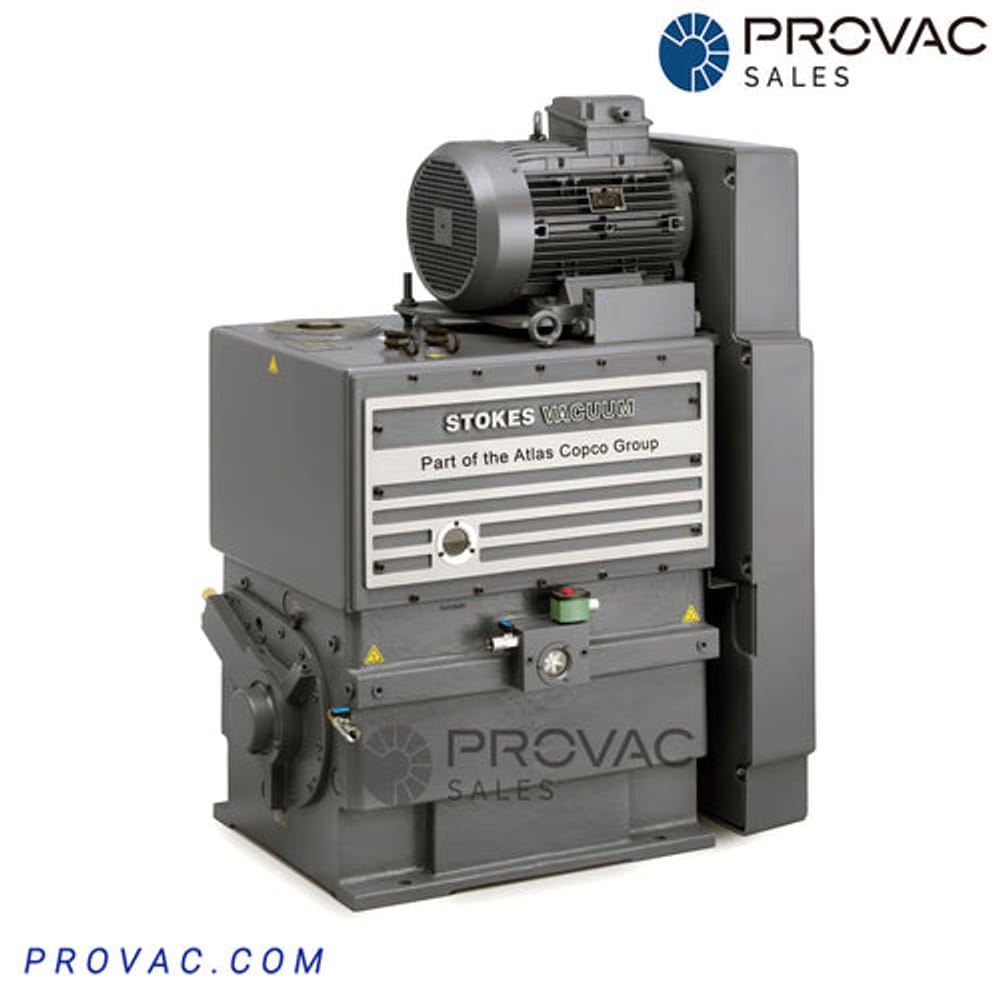
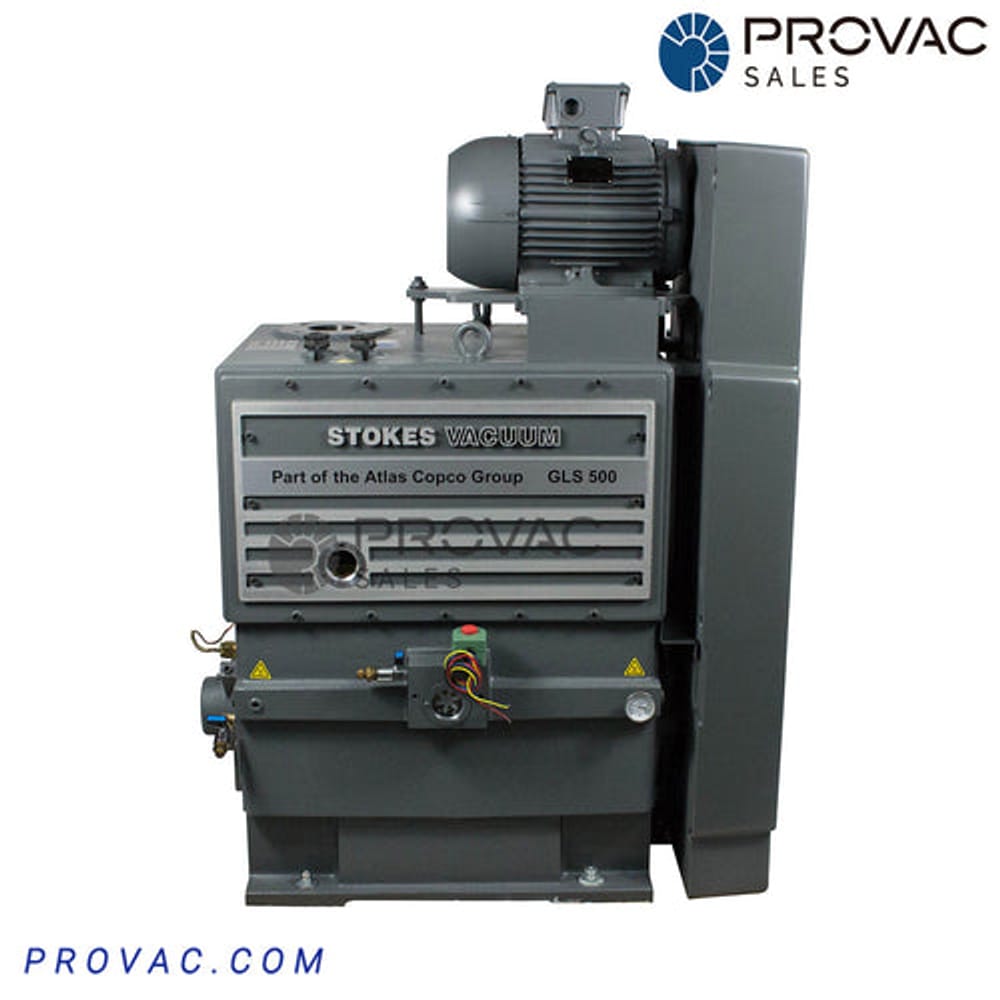
Some vacuum processes are simply hard on pumps. Vacuum furnaces, transformer drying lines and large coating chambers bring heavy gas loads, dust, vapors and long run times. Atlas Copco GLS rotary piston pumps are built for that kind of work. Heavy cast and ductile iron construction, slow rotation and large internal clearances give them a long service life in demanding industrial duty. At Provac Sales, we supply the Atlas Copco GLS 250 and GLS 500 new and rebuilt, and we offer repair and rebuild service for Atlas Copco vacuum equipment.
- Atlas Copco GLS 250 rotary piston pump, the smaller frame in the series
- Atlas Copco GLS 500 rotary piston pump, part number 8153311355, about 300 CFM at 60 Hz
The GLS 500 listing shows a 4 inch ASA/ANSI inlet, 3 inch ASA/ANSI exhaust, a 3-phase 230/460 V 60 Hz motor, hydrocarbon oil and an ultimate pressure below 2.5 x 10⁻² Torr without gas ballast. It weighs about 1,750 lbs, so plan for proper rigging and a solid foundation. The GLS 250 shares the same design in a smaller frame. Manuals and technical sheets are linked on each product page.
How a Rotary Piston Pump Works
A rotary piston pump uses an eccentric that drives a piston around the inside of a cylinder. A slide valve attached to the piston moves through a pivoting guide and separates the inlet side from the compression side. As the eccentric turns, gas is drawn in, trapped, compressed and pushed out through the exhaust valve. Oil seals the clearances, lubricates moving parts and carries away heat.
Compared with a rotary vane pump, a piston pump has fewer, heavier moving parts and larger clearances. It turns slowly and is balanced to reduce vibration. That combination makes it more tolerant of particulates and heavy gas loads, and less prone to the vane wear that limits vane pumps in dirty service.
Key Features of the GLS Series
- Robust cast and ductile iron construction
- Compact design with few moving parts and large clearances
- Slow rotational speed for long component life
- Balanced design to reduce vibration
- Automatic lubrication
- Water-saving temperature control to keep the pump at the right running temperature
- Gas ballast for handling condensable vapors
- Series pumping speed of about 138 to 260 CFM, with motor power from 7.5 to 25 hp at 60 Hz
Adding a ZRS Booster
GLS pumps are often used as the backing stage of a larger pumping system. Adding an Atlas Copco ZRS mechanical booster on top of a GLS 250 or GLS 500 raises system pumping speed to roughly 294 to 1,530 CFM and improves performance at lower pressures. The ZRS hydrokinetic drive lets the booster and piston pump start together without a bypass valve. Browse our Atlas Copco blowers and boosters collection to build a matched set.
Applications
- Vacuum heat treatment, vacuum melting and metallurgy
- Chemical processing
- Transformer drying and cable fluid conditioning
- Vacuum coating and large-area glass coating
- PET processing
- Large chamber pumping
- Leak detection systems
- Pharmaceutical processing
- Automotive and aerospace manufacturing
Rotary Piston vs Rotary Vane: Which Do You Need?
Both are oil-sealed and both reach similar rough vacuum levels, but they fit different jobs:
- Choose a GLS rotary piston pump for heavy-duty, high-throughput service, dusty or dirty processes, large chambers and long continuous run times
- Choose a GVD or GVS rotary vane pump for lighter loads, smaller systems, lower purchase cost and a smaller footprint
If you are replacing an older piston pump from another brand, send us the model and flange sizes. A GLS pump is often a practical replacement, but footprint, flange sizes, motor wiring and cooling connections need to be checked first. See our Atlas Copco vane pumps collection for vane pump options.
How to Choose the Right GLS Pump
Before ordering, confirm:
- Chamber volume and required pump-down time
- Working pressure and ultimate pressure needed
- Gas load, including water vapor, solvents and particulates
- Whether a booster is already installed or planned
- Inlet and exhaust flange sizes on existing pipework
- Supply voltage, phase and frequency
- Cooling water availability, floor space and lifting access
Maintenance Tips
- Check oil level and condition daily on heavy-duty processes
- Change oil more often on dirty or wet processes, since contaminated oil speeds up wear
- Use gas ballast when pumping water vapor or condensables
- Keep the inlet filter or dust trap clean
- Monitor cooling water flow and running temperature
- Listen for knocking or new vibration, which can point to worn bearings or slide valve parts
For longer oil life, consider an exhaust oil mist filter or oil filtration system. Browse our oil filtration systems and vacuum fluids and greases collections.
Installation Tips
- Use proper lifting equipment and lift only at the designated points, since the GLS 500 weighs about 1,750 lbs
- Mount the pump on a level, rigid foundation and use anti-vibration mounts where the manual recommends them
- Support inlet and exhaust piping independently so no load sits on the pump flanges
- Fill the pump with the correct grade of hydrocarbon oil to the sight glass before the first start
- Connect and check cooling water flow before running the pump
- Confirm motor rotation with a short bump test
- Pipe the exhaust away from the work area, ideally through an oil mist eliminator
Record base pressure, oil temperature and pump-down time on the first run. Those figures give you a reliable reference for spotting wear later.
Signs Your Piston Pump Needs Service
- Base pressure is rising or pump-down is slower
- Oil is dark, milky or full of particulates soon after a change
- Knocking, vibration or new mechanical noise
- Oil leaks at shaft seals or gaskets
- Overheating or high motor current
New vs Rebuilt GLS Pumps
Rotary piston pumps are built to be rebuilt. The heavy castings last a long time, so replacing bearings, seals, valves and worn internal parts can return a pump to service at a fraction of the cost of a new unit. A new GLS pump is the better choice for new installations or where full factory warranty is required. Each quotation confirms the condition and warranty.
Atlas Copco Piston Pump Repair
Provac Sales repairs and rebuilds Atlas Copco vacuum pumps, including GLS rotary piston pumps. Submit an RMA request, complete the contamination data sheet and drain the oil before shipping. Given the weight, tell us your loading arrangements so we can plan freight. See our pump repair page for more information.
Atlas Copco GLS Piston Pumps FAQ
1. What is the pumping speed of the Atlas Copco GLS 500?
The GLS 500 listing shows about 300 CFM at 60 Hz, with an ultimate pressure below 2.5 x 10⁻² Torr without gas ballast. Check the technical sheet for the full performance curve.
2. Can a GLS pump be used with a booster?
Yes. GLS 250 and GLS 500 pumps are commonly paired with Atlas Copco ZRS boosters, which raise system pumping speed to roughly 294 to 1,530 CFM depending on the combination.
3. Why choose a rotary piston pump over a rotary vane pump?
Rotary piston pumps have heavier construction, slower rotation and larger clearances. They handle dirty processes, heavy gas loads and long run times better than vane pumps, which makes them common in metallurgy, coating and drying.
4. Can a GLS pump replace an older piston pump from another brand?
Often, yes, but footprint, flange sizes, motor wiring and cooling connections need to be checked. Send us your existing pump model and we will confirm the fit.
5. Can you rebuild my Atlas Copco GLS pump?
Yes. Provac Sales repairs and rebuilds Atlas Copco vacuum pumps. Submit an RMA, drain the oil and include the model, serial number and symptoms before shipping.
Request a Quote on Atlas Copco Piston Pumps
Send us your chamber size, working pressure, process details and supply voltage. We will recommend a GLS 250 or GLS 500, with or without a ZRS booster, confirm availability, or quote a rebuild of your existing pump. Contact us or call 831-462-8900.