
Pfeiffer Diaphragm Pumps

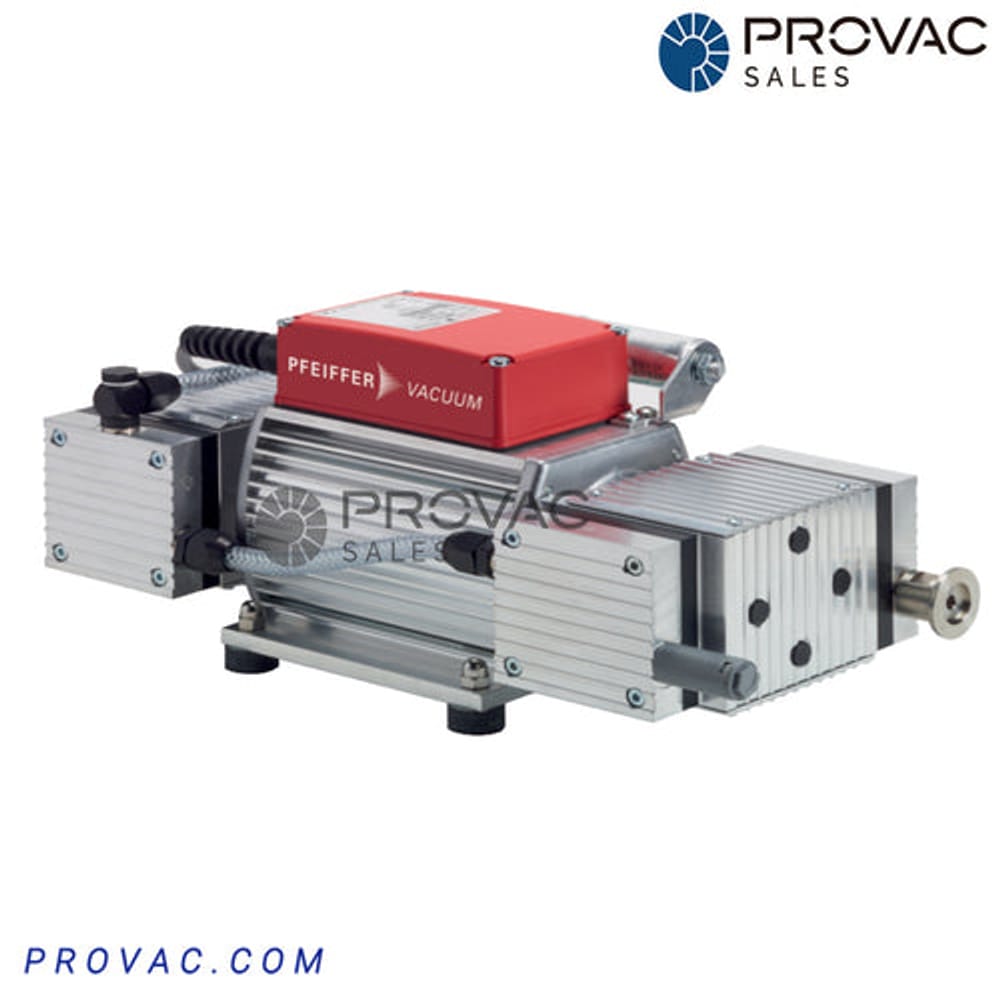
Pfeiffer Diaphragm Pumps
Pfeiffer MVP diaphragm pumps deliver clean, oil-free vacuum for laboratories, analytical instruments and compact high vacuum systems. Because nothing in the gas path is lubricated, they keep oil out of the process and out of the room, and they need no oil changes. Pfeiffer MVP pumps are especially well known as backing pumps for HiPace turbo pumps. At Provac Sales, we supply new and rebuilt Pfeiffer MVP pumps and repair the MVP series in house.
Pfeiffer MVP Models We Carry
Our Pfeiffer diaphragm pump collection includes:
- Pfeiffer MVP 010-3 DC
- Pfeiffer MVP 015-2, new and rebuilt
- Pfeiffer MVP 015-4, new and rebuilt
- Pfeiffer MVP 020-3 AC
- Pfeiffer MVP 030-3 DC
- Pfeiffer MVP 040-2
- Pfeiffer MVP 070-3 and MVP 070-3C
- Pfeiffer MVP 160-3
- Alcatel AMD-1 dry diaphragm pump, rebuilt
Most listings are priced on request, and some rebuilt units are listed with a price, such as the rebuilt MVP 015-4.
Understanding Pfeiffer MVP Model Names
The MVP naming system tells you a lot about each pump:
- The first number reflects the nominal pumping speed, so an MVP 070 is larger than an MVP 015
- The second number, after the dash, is the number of pumping stages, such as 2, 3 or 4
- DC or AC indicates the motor type, with DC versions often used where speed control or compact integration is needed
- A C suffix, as on the MVP 070-3C, indicates a chemically resistant version for corrosive vapors
More stages generally means a lower ultimate pressure. A four-stage MVP 015-4, for example, reaches a lower pressure than a two-stage MVP 015-2, which makes it a strong choice for turbo backing.
How Diaphragm Pumps Work
A diaphragm pump uses a flexible membrane driven up and down by a connecting rod. As the diaphragm moves down, it draws gas in through an inlet valve. As it moves up, it compresses the gas and pushes it out through an exhaust valve. Multi-stage pumps connect several heads in series to reach lower pressures.
The pumping chamber is completely oil-free, so the pump is clean and low maintenance. The diaphragms and valves are the main wear parts and are replaced during routine service.
How to Choose a Pfeiffer MVP Pump
Consider these points:
- Required ultimate pressure and working pressure
- Pumping speed needed for your chamber or instrument
- Whether the pump will back a Pfeiffer HiPace turbo pump, and the turbo's backing requirements
- Gases and vapors being pumped, which may call for a chemically resistant C version
- Motor type and electrical supply, AC or DC
- Inlet connection, usually a small KF flange or hose fitting
- Noise and vibration limits in the lab
- Whether the pump will run continuously
Applications for Pfeiffer Diaphragm Pumps
Pfeiffer MVP pumps are used in:
- Backing HiPace turbo pumps in HiCube pumping stations and instruments
- Mass spectrometers and analytical systems
- Rotary evaporation and solvent recovery
- Vacuum filtration, gel drying and concentrators
- Vacuum ovens and desiccators
- Laboratory sample preparation
- Leak detection and test equipment
Diaphragm Pumps vs Rotary Vane and Scroll Pumps
A Pfeiffer DUO rotary vane pump reaches a lower ultimate pressure and higher speed, but it needs oil changes and exhaust filtration. A Pfeiffer HiScroll pump offers more speed and lower pressure than a diaphragm pump while staying oil-free. An MVP diaphragm pump is the most compact, quiet and low-maintenance of the three, which is why it is the go-to choice for small turbo stations and bench-top work.
Tips for Longer Diaphragm Life
Simple habits help MVP pumps last longer between services:
- Use a cold trap or condenser when pumping solvents
- Run the pump briefly with an open inlet after solvent work to purge the heads
- Keep the inlet line short and wide to preserve speed
- Give the pump free airflow, since heat shortens diaphragm life
- Avoid pumping liquids or particulates
- Watch for rising ultimate pressure or slower pump-down, which signal wear
New vs Rebuilt Pfeiffer MVP Pumps
New MVP pumps suit new systems and users who want current-production models. Rebuilt MVP pumps are a practical way to replace a worn pump in an existing station or instrument while keeping the same footprint and connections. Each listing and quotation confirms the condition and warranty.
Pfeiffer MVP Repair Service
Provac Sales repairs Pfeiffer MVP series diaphragm pumps. A typical service includes inspection, replacement of diaphragms, valves and seals, cleaning of the heads, and testing for ultimate pressure. Submit an RMA request and complete the contamination data sheet before shipping, especially if the pump has handled solvents or hazardous chemicals. See our pump repair page for more.
What to Send Us for a Fast Quote
To help us respond quickly, please include:
- The MVP model and part number from the rating plate
- Motor type and voltage
- Whether you need new or rebuilt
- The turbo pump or instrument it will back, if any
- The gases and vapors being pumped
About Pfeiffer Vacuum
Pfeiffer Vacuum was founded in 1890 in Wetzlar, Germany, and is known as a pioneer of turbomolecular pump technology. In 2010 the company acquired Adixen, the former Alcatel Vacuum Technology business, which is why many Alcatel and Adixen designs now carry the Pfeiffer name. The MVP series is one of Pfeiffer's best-known oil-free product lines and a standard partner for HiPace turbo pumps.
Choosing Between Two, Three and Four Stages
The number of stages is often the deciding factor between two otherwise similar MVP pumps. Two-stage models offer good flow for filtration and general lab work. Three-stage models reach lower pressures for evaporation and light backing. Four-stage models, such as the MVP 015-4, deliver the lowest ultimate pressure in the range and are the usual choice for backing small turbo pumps. If you are unsure, tell us the task and the turbo model, and we will point you to the right stage count.
Frequently Asked Questions
Can a Pfeiffer MVP 015-2 back a HiPace turbo pump?
Yes, the MVP 015-2 is used to back smaller HiPace pumps in compact stations. For lower backing pressures, the four-stage MVP 015-4 is often preferred. Confirm the turbo pump's backing requirements.
What is the difference between the MVP 070-3 and the MVP 070-3C?
The C version is chemically resistant, with materials suited to corrosive vapors. Choose it for aggressive chemistry.
How often should MVP diaphragms be replaced?
It depends on run hours and the application. Clean applications can run a long time between services. Solvent and vapor-heavy applications need more frequent attention.
Is the Alcatel AMD-1 similar to Pfeiffer MVP pumps?
The AMD-1 is a former Alcatel dry diaphragm pump. Alcatel Vacuum, later Adixen, became part of Pfeiffer Vacuum. Contact us to compare it with current MVP models.
Request a Quote on Pfeiffer Diaphragm Pumps
Send us the MVP model you need, or describe your application, target pressure and electrical supply. We will confirm availability or quote a repair of your existing pump. Contact us or call 831-462-8900.