
CTI Cryo-Torr Cryopumps and Helium Compressors

CTI
CTI Cryo-Torr 8F Cryo Pump 11" Conflat Inlet, Rebuilt
Contact us for pricing

CTI
CTI Cryo-Torr 8F OB Cryo Pump ISO 200k Inlet, Rebuilt
Contact us for pricing

CTI
CTI 9600 Compressor (high voltage), Rebuilt
$ 15,000.00
CTI
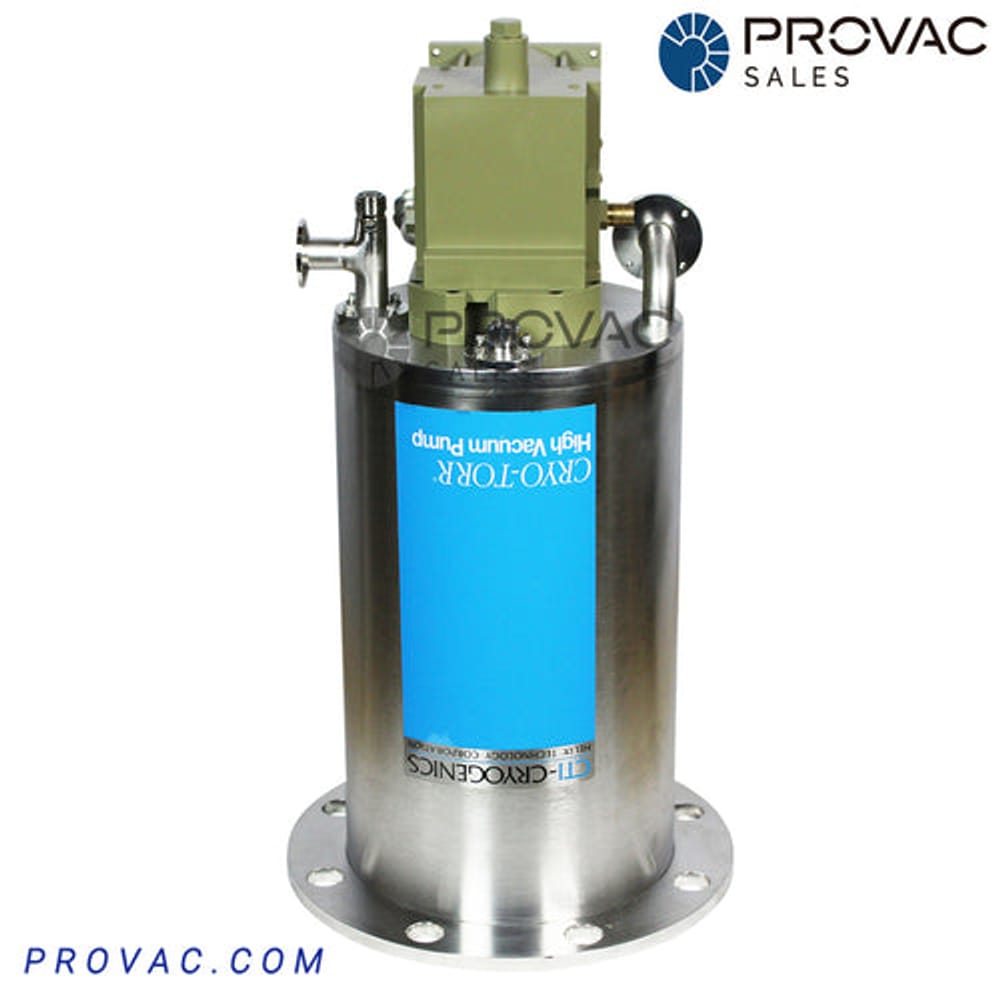
CTI Cryo-Torr 8 Cryo Pump, Diode, 11" ASA, Rebuilt
$ 7,500.00

CTI
CTI Cryo-Torr 8F IS OB Cryo Pump, Rebuilt
$ 8,868.00

CTI
CTI Cryo-Torr 8F Cryo Pump, Rebuilt
Contact us for pricing

CTI
CTI Cryo-Torr 8 Cryo Pump, Diode, 10" Conflat, Rebuilt
$ 7,500.00

CTI
CTI Cryo-Torr 4 Cryo Pump, Rebuilt
$ 4,725.00

CTI
CTI Cryo-Torr 500 Cryo Pump, Rebuilt
$ 23,339.00
CTI
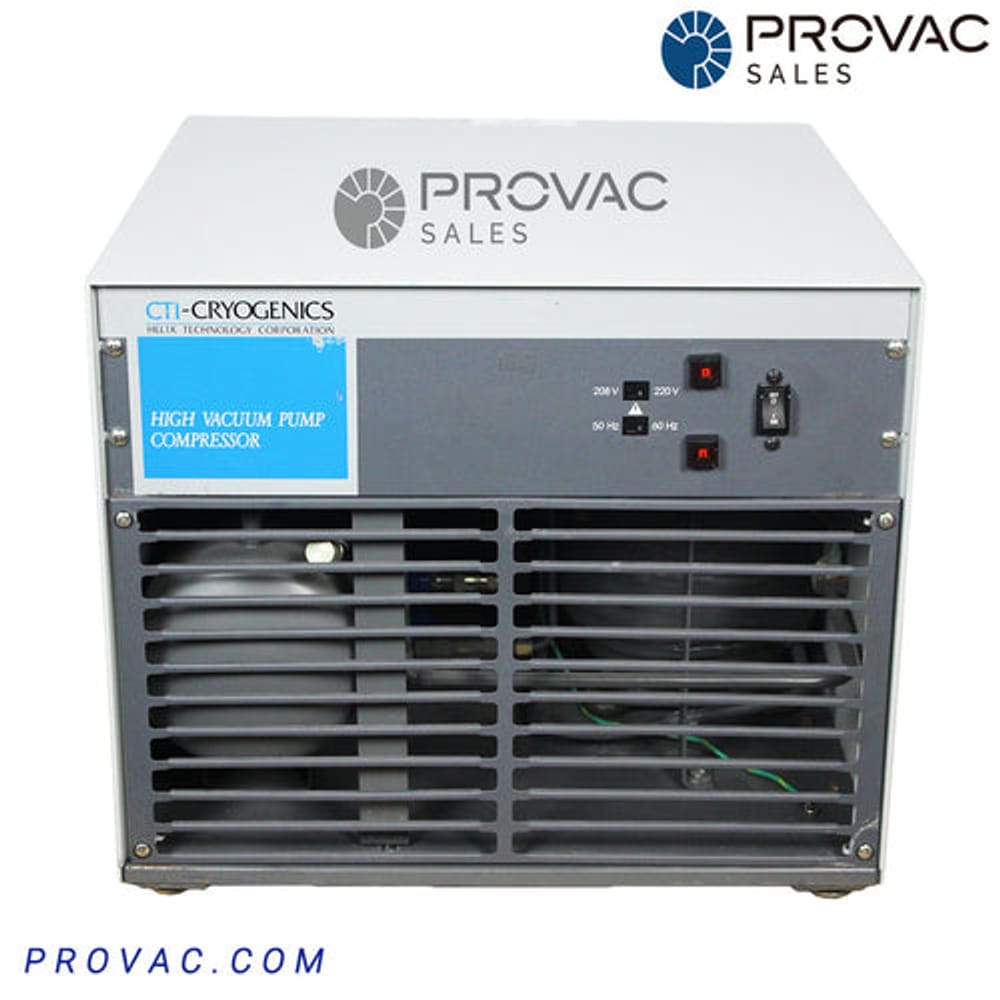
CTI 8200 Compressor, 1 Phase, Water Cooled, Rebuilt
$ 8,500.00

CTI
CTI 8200 Compressor, 1 Phase, Air Cooled, Rebuilt
$ 8,500.00

CTI
CTI Cryo-Torr 250FE IS OB Cryo Pump, Rebuilt
$ 10,999.00
CTI Cryo-Torr Cryopumps and Helium Compressors
A cryopump traps gas by freezing and adsorbing it on very cold surfaces inside the pump. It has no oil and no moving parts exposed to the vacuum, so it gives fast, clean pumping of all gases from about 10-3 down to 10-9 Torr. Every CTI-Cryogenics cryopump runs as a system: the cryopump on the chamber, a helium compressor and a pair of helium lines between them.
CTI-Cryogenics, now part of Edwards, is the most widely installed cryopump brand in semiconductor, coating and research systems. At Provac Sales, we supply CTI cryopumps and compressors new and rebuilt, and we repair and rebuild them in our own shop.
CTI Cryopump and Compressor Models We Carry
Cryo-Torr Cryopumps
- Cryo-Torr 8, 200 mm (8 inch) inlet, about 1,500 l/s for air, 4,000 l/s for water vapor, 2,500 l/s for hydrogen and 1,200 l/s for argon
- Cryo-Torr 8F, the flat, low-profile version of the 8 with the same 200 mm inlet class, offered with ISO and 11 inch ConFlat inlets
- Cryo-Torr 10 and 10F, about 290 to 300 mm inlets for larger coating and research chambers
- Cryo-Torr 400, a 400 mm inlet pump for large batch coaters
- Cryo-Torr 7, 100 and 4F for smaller chambers and older tools
On-Board Cryopumps
- On-Board 8 and On-Board 8F, with built-in electronics that control the pump, monitor temperature and run fast regeneration
- On-Board IS models, run from the IS-1000 compressor
Helium Compressors
- 8200, air- or water-cooled, single- or three-phase, for pumps up to 8 inches
- 8500 and 8510, water-cooled compressors common on older installations
- 9600, a water-cooled compressor for single pumps or groups of pumps, in low and high voltage versions
- 9700A, a higher-output compressor that can run several cryopumps from one unit
Many listings are rebuilt units. Some show a price and others are quote-based. Each product page lists inlet flange, pumping speeds, cooling and voltage.
Cryo-Torr vs On-Board Cryopumps
Both families use the same two-stage cold head design. The difference is control:
- Cryo-Torr pumps are the simpler design. Temperature is read by a hydrogen vapor gauge or a diode sensor, and regeneration is handled by the tool controller or by hand. They are easy to service and widely used on coaters and research systems.
- On-Board pumps carry their own electronics on the pump. They monitor the second stage temperature, control heaters and run timed or fast regeneration on their own. This cuts downtime on production tools, which is why On-Board pumps are common in semiconductor fabs.
The F suffix, as in the 8F and 10F, marks the flat, low-profile configuration. It suits tools where the space under the chamber is tight.
How a Cryopump Works
The compressor sends high-pressure helium through the supply line to the cold head on the pump. Inside the cold head, a displacer moves back and forth and the helium expands, which cools two stages.
The first stage runs at about 50 to 80 K and holds a radiation shield and a frontal array that freeze water vapor. The second stage runs at about 10 to 20 K. It freezes nitrogen, oxygen and argon, while charcoal on the back of the array adsorbs hydrogen, helium and neon.
The low-pressure helium returns to the compressor, where it is compressed, cooled and cleaned by an oil separator and adsorber before the cycle repeats.
Regeneration
A cryopump stores the gas it pumps, so it has a capacity limit. Regeneration warms the pump to release the trapped gas, which a roughing pump then removes, and cools it back down.
Regenerate when the pump has reached its argon or hydrogen capacity, when base pressure rises, or when the second stage temperature climbs. Before cooling down, rough the pump to its crossover pressure so the frontal array is not loaded with air.
Key Features
- Oil-free pumping with no backstreaming into the chamber
- Very high pumping speed for water vapor, the main gas load in most high vacuum chambers
- No backing pump needed during operation, only for roughing and regeneration
- Mount in any orientation on most models
- On-Board electronics for automatic regeneration and remote monitoring
- Compressors that run on 50 or 60 Hz power
Applications for CTI Cryopumps and Compressors
- Semiconductor PVD, sputtering and ion implant tools
- Optical, architectural and decorative coating
- Flat panel display and LED production
- Load locks and transfer chambers
- Space simulation chambers and research systems
- Electron beam evaporation and thin film deposition
Choosing a Cryopump and Compressor
Before ordering, confirm:
- Chamber flange size and type, such as ISO, ANSI or ConFlat
- Gas load, especially argon flow on sputtering tools
- Cryo-Torr or On-Board control, to match your tool controller
- Compressor capacity for the number of pumps you will run
- Compressor cooling, air or water, and supply voltage and phase
- Helium line length and whether you need an adsorber or lines
An 8200 compressor runs one pump up to 8 inches. A 9600 runs a single pump or a group of smaller pumps. A 9700A suits several pumps on one tool.
Maintenance Tips
- Check compressor static helium pressure against the label and top up only with 99.999% pure helium
- Replace the compressor adsorber at the interval in the manual, about every three years on a 9600
- Service the cold head displacer and seals at the interval in the manual, using a minor or major maintenance kit
- Regenerate on a schedule set by your gas load, not only after a problem
- Keep cooling water flow and temperature inside the compressor limits
- Keep helium line couplings clean and capped when disconnected
Signs Your Cryopump Needs Service
- Longer cooldown or a second stage that will not reach temperature
- Base pressure rising soon after regeneration
- Knocking or a changed chirping sound from the cold head
- Compressor helium pressure dropping, which points to a leak
- Compressor tripping on high temperature or motor overload
New vs Rebuilt CTI Cryopumps
A rebuilt CTI cryopump is a cost-effective way to replace a pump of the same model without changing the chamber flange, helium lines or controls.
A rebuild usually includes a new or rebuilt cold head displacer, seals and bearings, a new charcoal array, new indium gaskets and a leak check, followed by a cooldown test. Compressor rebuilds cover the capsule, adsorber, cooling and electrical checks, and a helium recharge.
CTI Cryo Pumps and Compressors Repair
Provac Sales repairs and rebuilds CTI Cryo-Torr and On-Board cryopumps and 8200, 8500, 9600 and 9700 helium compressors. Submit an RMA request and complete the contamination data sheet before shipping.
Ship compressors with their helium charge per the manual and include the model, serial number and symptoms. See our pump repair page for more information.
Related Collections
- Edwards vacuum pumps, roughing and dry pumps for cryopump regeneration
- Leybold dry pumps, dry roughing pumps for clean cryopump systems
- All CTI products
- All cryo pumps and compressors from every brand we carry
Find the Right CTI Cryopump and Compressor
Send us your cryopump model, inlet flange, compressor model, supply voltage, cooling type and application. We will recommend the right Cryo-Torr or On-Board pump and compressor, confirm new or rebuilt availability, or quote a repair of your existing system.
Browse our inventory above or contact our vacuum specialists at 831-462-8900.
CTI Cryopump and Compressor FAQ
1. What is the difference between a CTI Cryo-Torr 8 and 8F?
Both are 8 inch class cryopumps with the same pumping performance class. The 8F is the flat, low-profile configuration, which fits tools with less space under the chamber. Check the inlet flange on each listing, since both are sold with ISO, ANSI and ConFlat inlets.
2. Which compressor do I need for a CTI cryopump?
An 8200 compressor runs a single pump up to 8 inches. A 9600 runs a single pump or a group of pumps, and a 9700A has more helium output for several pumps on one tool. Send us your pump models and we will confirm the match.
3. How often does a CTI cryopump need regeneration?
It depends on gas load. Regenerate when the pump reaches its argon or hydrogen capacity, when base pressure rises, or when the second stage temperature climbs. Sputtering tools with high argon flow regenerate more often than clean research systems.
4. What does a cryopump maintenance kit replace?
A minor kit replaces seals and O-rings in the cold head. A major kit adds the displacer and bearings. The charcoal array is replaced separately when it is saturated or contaminated.
5. Can a cryopump pump hydrogen and helium?
Yes, through the charcoal adsorbent on the second stage array. Hydrogen and helium fill the charcoal faster than other gases, so pumps on hydrogen-heavy processes need more frequent regeneration.