
Pfeiffer Helium Leak Detectors
Pfeiffer
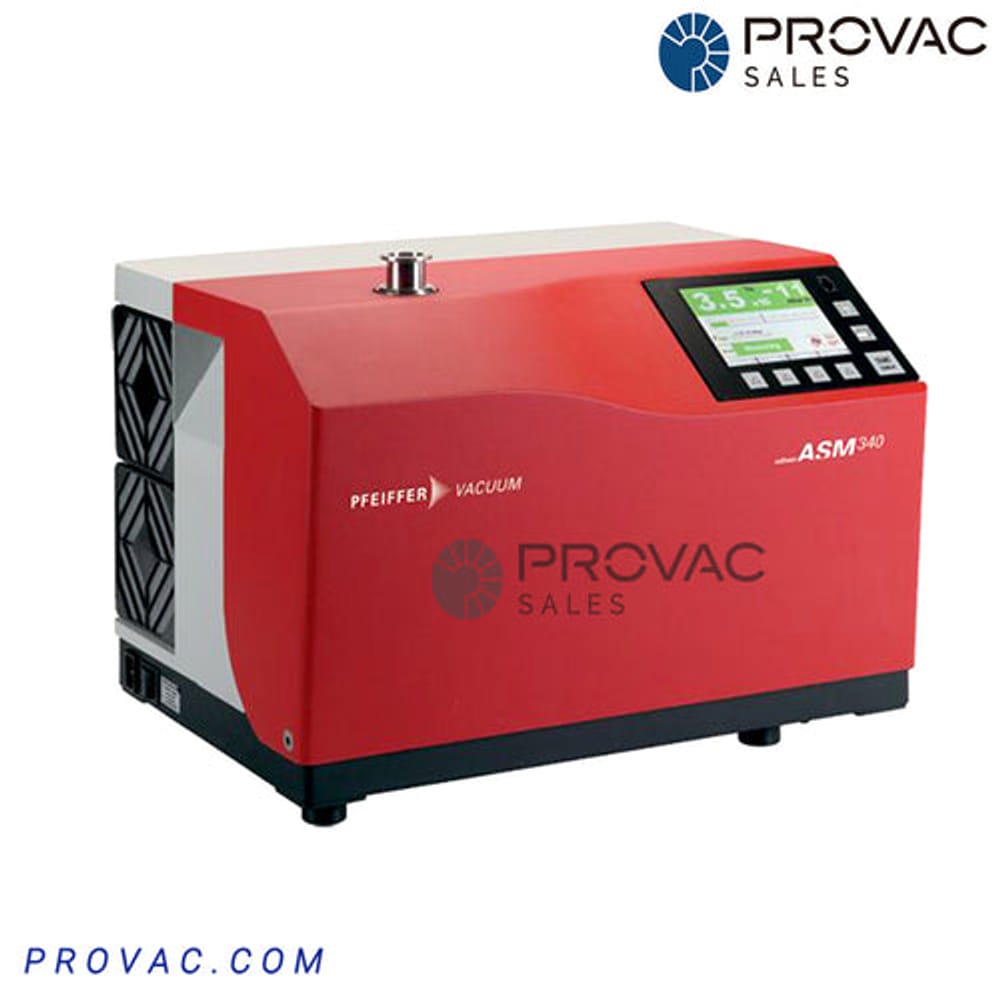
Pfeiffer ASM-340 Helium Leak Detector RENTAL
$ 250.00

Alcatel
Alcatel ASM-182TD+ Helium Leak Detector, Rebuilt
$ 17,500.00

Pfeiffer ASM-142S Helium Leak Detector
Contact us for pricing

Pfeiffer ASM-182T Helium Leak Detector
Contact us for pricing

Pfeiffer
Pfeiffer ASM-102S HLD Sniffer
Contact us for pricing

Pfeiffer
Pfeiffer ASI-35 Helium Leak Detector
Contact us for pricing

Pfeiffer
Pfeiffer ASM-1002 Helium Leak Detector
Contact us for pricing

Pfeiffer
Pfeiffer ASM-192T2D+ Helium Leak Detector
Contact us for pricing

Pfeiffer ASM-182TD+ Helium Leak Detector
Contact us for pricing

Pfeiffer
Pfeiffer ASM-392 Helium Leak Detector
Contact us for pricing

Pfeiffer
Pfeiffer ASM-390 Helium Leak Detector
Contact us for pricing

Pfeiffer
Pfeiffer ASM-340I Helium Leak Detector
Contact us for pricing
Pfeiffer Helium Leak Detectors
Pfeiffer ASM helium leak detectors are used in labs, service departments and production lines around the world to find and measure leaks quickly and accurately. Built on helium mass spectrometry, they can detect very small leaks in vacuum systems, sealed components and pressurized parts. At Provac Sales, we supply new and rebuilt Pfeiffer and Alcatel ASM leak detectors and repair the ASM series in house.
Helium is the preferred tracer gas because it is light, inert, non-toxic and present only in tiny amounts in normal air. That makes even a small helium signal a reliable sign of a leak.
Pfeiffer Leak Detector Models We Carry
Our Pfeiffer helium leak detector collection includes:
- Pfeiffer ASM 340, rebuilt, a compact, multipurpose detector widely used for maintenance and production
- Pfeiffer ASM 340D, the dry-backed version of the ASM 340
- Pfeiffer ASM 340I, a variant of the ASM 340 platform
- Pfeiffer ASM 380, a mobile detector with high pumping capacity for larger systems
- Pfeiffer ASM 390 and ASM 392, high-performance dry detectors for semiconductor and clean applications
- Pfeiffer ASM 192T and ASM 192T2D+, earlier-generation detectors still widely in use
- Pfeiffer ASM 1002, a high-throughput detector for production and test systems
- Pfeiffer ASI 35, a compact detector designed for integration into automated test systems
- Pfeiffer MiniTest 300, a sniffer leak detector for quick checks
- Pfeiffer ASM 102S HLD sniffer
Many models are priced on request. Rebuilt units, such as the rebuilt ASM 340, may be listed with a price.
How Helium Leak Detection Works
A helium leak detector contains a small mass spectrometer tuned to detect helium. The detector keeps the spectrometer at high vacuum using its own turbo pump and backing pump. When helium enters the detector through a leak in the test part or system, the spectrometer measures it and displays a leak rate, typically in mbar l/s, Pa m3/s or atm cc/s.
The ASM 340 family can also detect hydrogen as a tracer gas in suitable configurations, which some users prefer for cost or availability reasons.
Test Methods
Pfeiffer ASM detectors support several test methods:
- Vacuum or spray testing, where the part is evacuated and helium is sprayed on the outside, offering the highest sensitivity
- Sniffer testing, where the part is pressurized with helium and a sniffer probe is moved over the outside
- Bombing or accumulation testing for sealed components
- Integrated testing in production lines using dedicated fixtures
How to Choose a Pfeiffer Leak Detector
Consider these factors:
- Smallest leak rate you need to detect
- Test methods required, such as spray, sniffing or both
- Whether you need a dry, oil-free detector, as in D versions and the ASM 390 and 392
- Size of parts or systems being tested, which affects pumping capacity needed
- Portability for field service versus a fixed station
- Production throughput and integration needs
- Electrical supply and available space
For large chambers, a detector with higher pumping capacity, such as the ASM 380, or an auxiliary pump can shorten test time.
Applications for Pfeiffer Leak Detectors
Pfeiffer ASM detectors are used in:
- Vacuum system maintenance and commissioning
- Semiconductor tool service and qualification
- Refrigeration, HVAC and heat exchanger testing
- Automotive, battery and fuel cell component testing
- Aerospace, satellite and space simulation testing
- Medical device and packaging seal integrity testing
- Research labs, accelerators and cryogenic systems
Calibration and Maintenance
Accurate measurements depend on regular calibration with a known reference leak. Many ASM detectors include an internal calibrated leak for routine checks. Other maintenance points include:
- Servicing the internal turbo and backing pumps on schedule
- Replacing ion source filaments as needed
- Keeping test ports, seals and sniffer probes clean
- Checking backing pump oil on wet versions
- Monitoring background levels for signs of contamination
Tips for Faster Leak Testing
- Spray helium from the top of the part downward, since helium rises
- Use a fine nozzle and low flow to pinpoint the leak location
- Allow time for the signal to settle on larger systems
- Ventilate the test area to keep helium background low
- Check calibration before critical tests
- Log leak rates and locations to track repeat problems
New vs Rebuilt Pfeiffer Leak Detectors
New ASM detectors suit users who want current-production instruments with the latest features. Rebuilt and serviced units can be an economical option for maintenance teams, labs and secondary test stations. Each listing and quotation confirms condition, calibration status and warranty.
Pfeiffer ASM Repair Service
Provac Sales repairs Alcatel and Pfeiffer ASM series helium leak detectors. Common repairs include spectrometer cell service, filament replacement, internal turbo and backing pump service, and electronics repair. We also service the Pfeiffer turbo pumps and Pfeiffer rotary vane pumps used in many detectors.
Before shipping a detector, submit an RMA request, complete the contamination data sheet, and pack the unit securely. See our pump repair page for more.
About Pfeiffer Vacuum
Pfeiffer Vacuum was founded in 1890 in Wetzlar, Germany, and is known as a pioneer of turbomolecular pump technology. In 2010 the company acquired Adixen, the former Alcatel Vacuum Technology business, which is why many Alcatel and Adixen designs now carry the Pfeiffer name. The ASM leak detector family came from Alcatel and Adixen, so you will find ASM 142, 182, 192 and other earlier units carrying Alcatel or Adixen branding alongside current Pfeiffer models.
Choosing Between Portable and Benchtop Detectors
Compact detectors such as the ASM 340 travel easily between tools and systems, which suits maintenance teams. Mobile, high-capacity units such as the ASM 380 or 390 handle larger chambers and semiconductor tools with faster response. Sniffers such as the MiniTest 300 are ideal for quick checks on pressurized lines. Tell us where and how you test, and we will match the detector to the job.
Frequently Asked Questions
What is the difference between the ASM 340 and ASM 340D?
The ASM 340 uses an oil-sealed backing pump, while the ASM 340D uses a dry backing pump. Choose the D version for clean applications.
Is the ASM series made by Alcatel or Pfeiffer?
The ASM series was developed by Alcatel Vacuum Technology, later Adixen, which became part of Pfeiffer Vacuum. Older units may carry Alcatel or Adixen branding.
Can the ASM 340 detect hydrogen?
The ASM 340 platform can be configured for hydrogen detection using a forming gas mixture. Confirm the configuration of the unit you are buying.
How often should a leak detector be calibrated?
Many users run a quick calibration check daily or before each test session, with full service and certification on an annual basis.
Can I use a Pfeiffer ASM detector on a semiconductor tool?
Yes. Dry, high-capacity models such as the ASM 390 and ASM 392 are designed for semiconductor tool service, where clean operation and fast response on large volumes matter. Confirm the test port and connection needed for your tool.
Request a Quote on Pfeiffer Leak Detectors
Send us the ASM model you need, the configuration, voltage and your test application. We will confirm availability or quote a repair of your existing detector. Contact us or call 831-462-8900.